So, lets start off with a bird. This is a Black Currawong (S. fuliginosa). It is a highly intelligent bird related closer to the magpie, rather than the Raven or Crow family. They have a lovely diverse range of calls.
While concentrating on taking photos only feet away from Tickles the Tigersnake, this bird, seemingly from nowhere, dropped out of the sky and landed on a fence post a few feet away from me! Yes, it scared the crap out of me!! Now, to be honest, not sure how I got this shot. Reflexes, luck or skill, it happened so quickly, I can’t believe I caught it – this photo is uncropped and sharp as a tack.
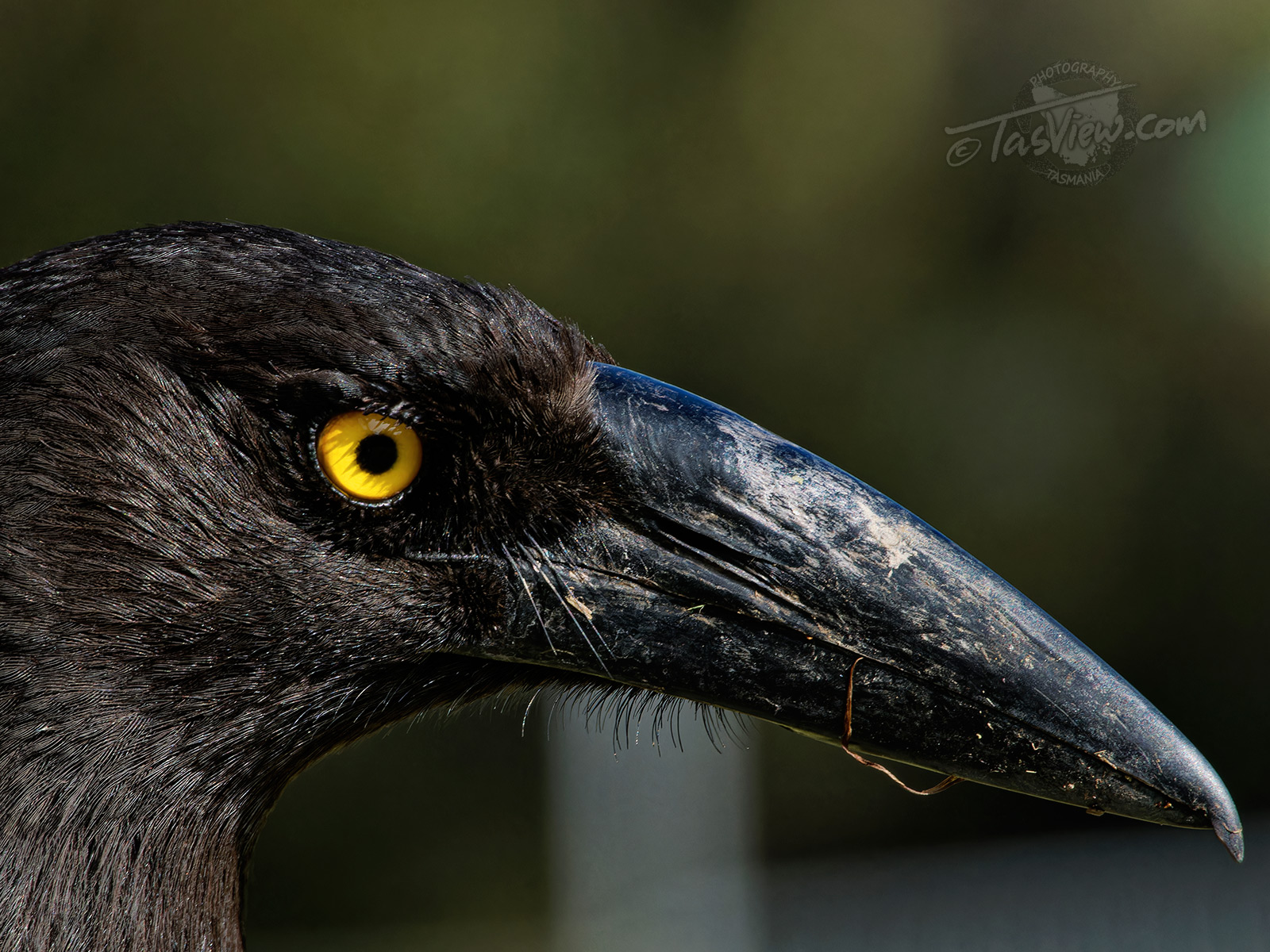
I was shooting Tickles hand-held in full manual mode, with back button focus and the 75-300mm zoom. Seemingly in one fluid motion, I turned, hit the back button to focus and fired the shutter button. Pretty sure I didn’t have time to check the exposure or line the shot up but by chance, it was bang on. This was the first shot! There was only one more frame before it flew off, but this was the best. I think it says a lot about the Olympus / OM system.
Settings: f/16, 1/800 sec, ISO-1000, zoom at 300mm, Subject distance 1.6m. Olympus OM-1, Olympus 75-300 f4.8-6.7 II ED MSC
Lucky for me, Tickles didn’t take advantage of the distraction and kept posing … here are some of my favorite snaky shots, close up and very personal.

As I took these photos and spent time with Tickles, it got me thinking that snakes actually have a pretty tough life.
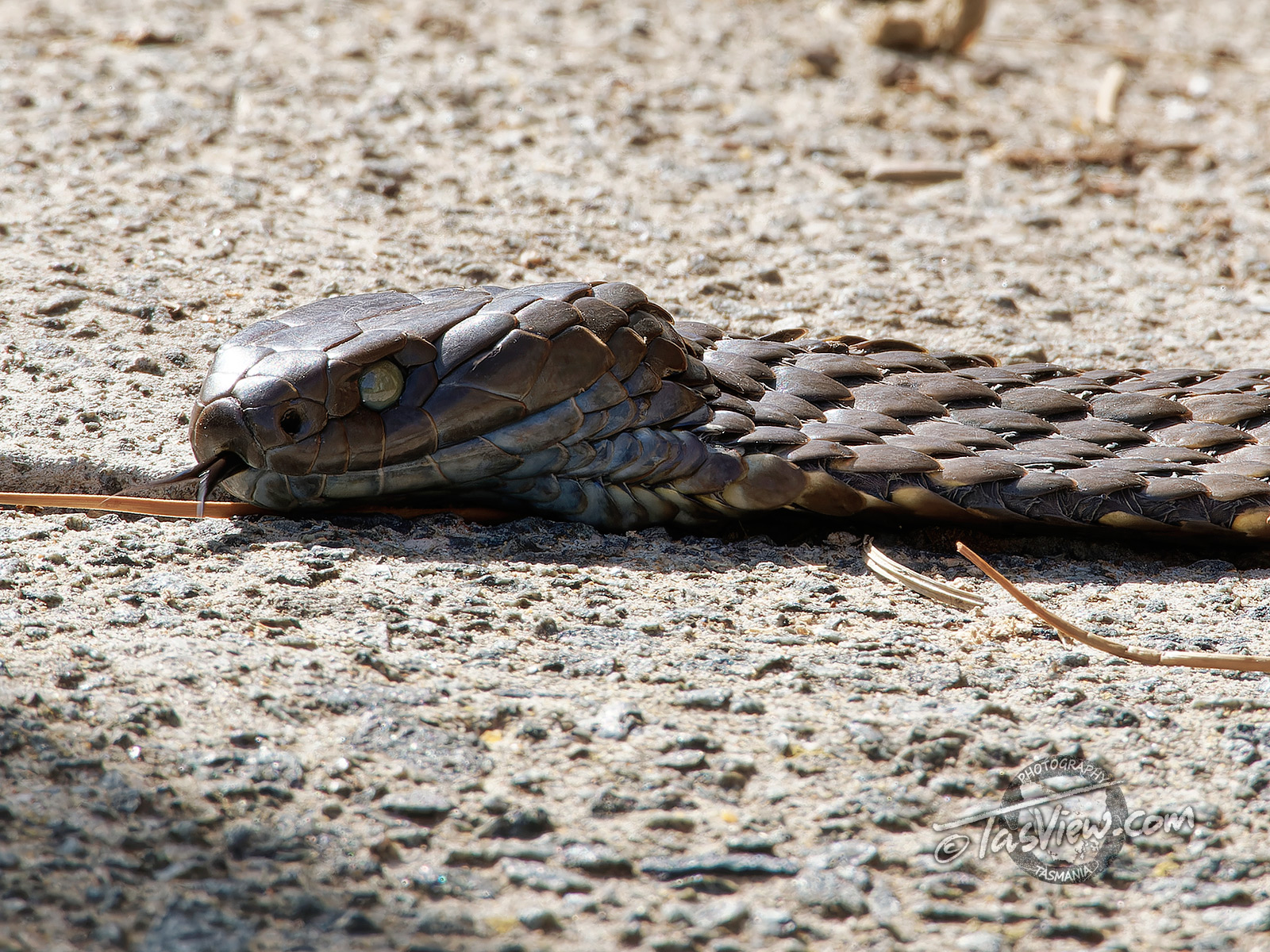
In Tasmania, most of it is spent underground in hibernation, between late March to late October. Then they have to wait until the sun comes out to warm them up so they can move about and hunt, as they are cold blooded. But, the sun also gets too hot for them, so they have to take shelter again for several hours in the middle of the day.
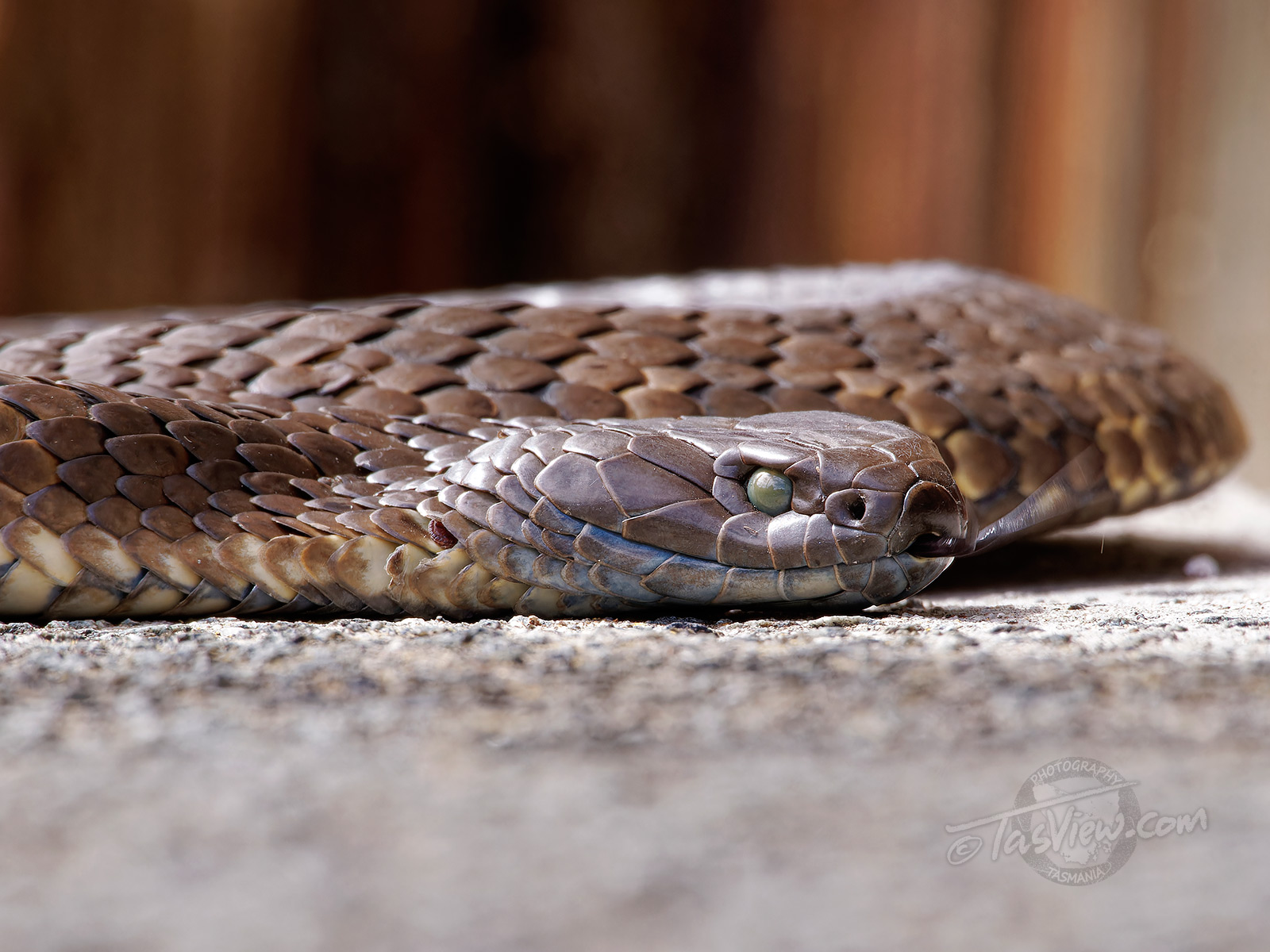
The Tiger Snake lays eggs which immediately hatch, and the babies have to quickly wriggle off in different directions and learn fend for themselves, lest the get eaten by their mother!
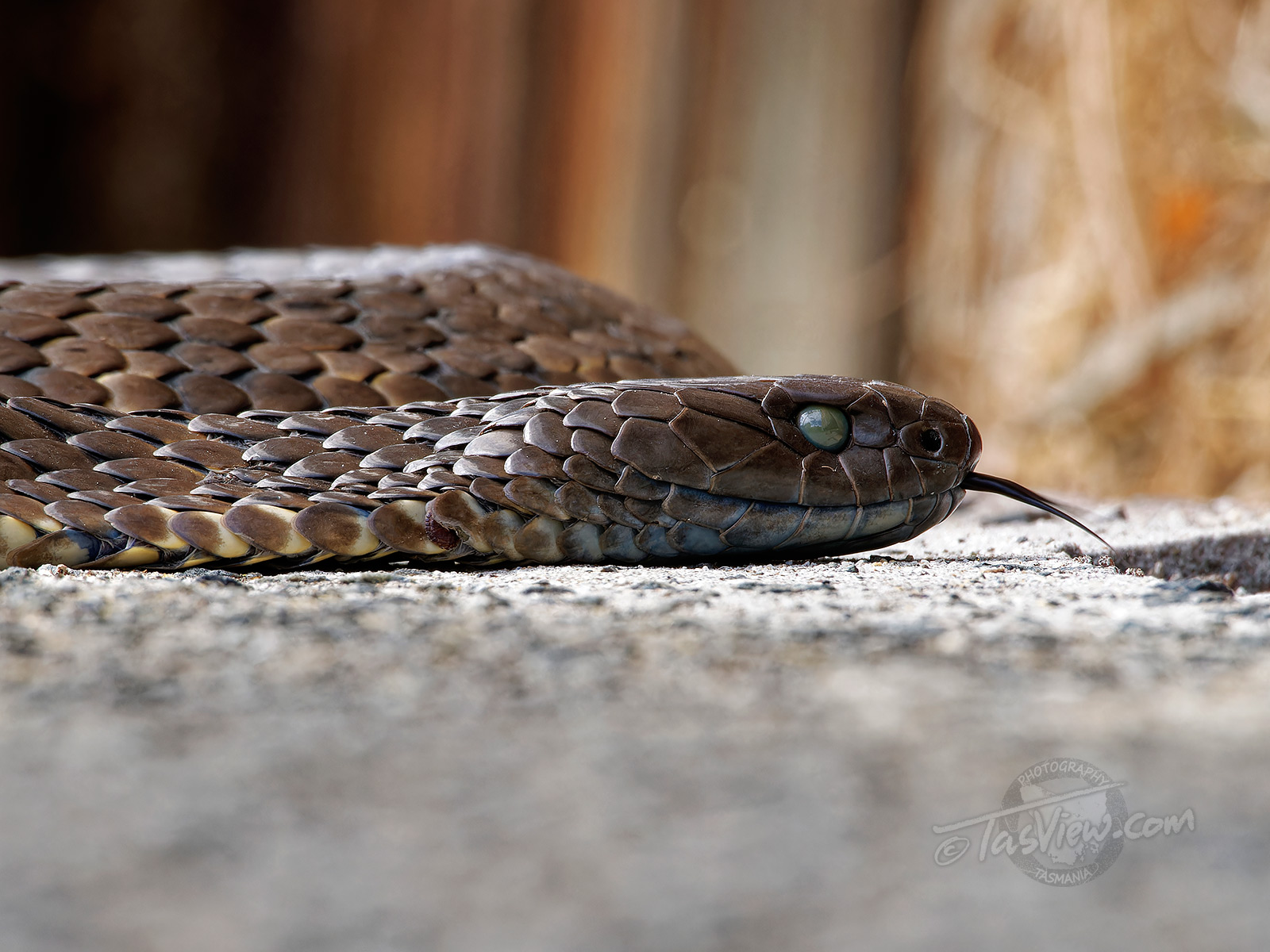
As they grow, they out-grow their skin, shedding the entire length, including transparent skin over their eyes, on a regular basis.

Thanks for visiting, I hope by now you are beginning to appreciate and respect the life and beauty of these stunning creatures. A life lived in fear, even shyness, is a life not fully lived.

 TasView
Interesting critters there, Tone!
LikeLike
I wonder if Tickles is giving you a bit of warning to not get too close by flattening out her neck. Rattlesnakes give live birth to their young and stay with them until their first shed. But rattlesnakes don’t eat other snakes like tiger snakes. Beautiful photos. Tickles is a great model. The black currawong has an impressive beak.
LikeLike
Super bird photo! Tickles is beautiful and obviously enjoys posing. 🙂 It’s amazing how you are able to get so close.
Snakes are also an age-old symbol of transformation and healing. I have a snake tattoo on my arm.
LikeLike
Great photos, Tone. I hope you were using a zoom and not getting eye to eye with your snaky subject.
LikeLike
All incredible photos! Particularly the bird, given it was a surprise shot. It is perfectly composed and in focus. Wow.
LikeLike
These are some really sharp details, especially for the bird!
LikeLike
Wonderful close-ups.
LikeLike